

Melaka
Melaka, or Malacca, is more than just a city; it's a living museum that chronicles five centuries of global trade, cultural fusion, and colonial conquest. As a UNESCO World Heritage Site since 2008, it offers tourists an intensely rewarding experience, easily navigable on foot, trishaw, or river cruise.The Core Heritage Zone: A Walk Through Time
The main attractions are clustered around the Melaka River, representing the layers of history left by the powerful Melaka Sultanate and its subsequent foreign rulers.
1. The Dutch Square (Red Square)
This iconic crimson-colored plaza is the city's heart and a compulsory photo stop. All the buildings here were originally white, but the British painted them the distinctive terracotta-red in the early 20th century.
The Stadthuys: Built in 1650, this is believed to be the oldest surviving Dutch historical building in the East. It once served as the official residence of the Dutch Governor and Deputy Governor. Today, it houses a complex of museums, including the History and Ethnography Museum, which provides a deep dive into Melaka's past.
Christ Church Melaka: Completed in 1753, this beautiful Protestant church features a blend of Dutch and local architectural influences. Notice the handmade ceiling beams, the brass Bible stand, and the plaques written in Dutch Armenian on the walls.
Queen Victoria's Fountain: Erected in 1901 by the British, this fountain remains a steadfast landmark, completing the colonial picture of the square.
2. St. Paul's Hill and A Famosa
Directly behind the Dutch Square, a short climb up St. Paul's Hill leads you to atmospheric ruins.
Ruins of St. Paul’s Church: Built by the Portuguese in 1521, this was the first Catholic church in Southeast Asia. It was later used as a burial ground by the Dutch, whose tombstones now line the interior walls. The hilltop location offers stunning panoramic views of the city, the Melaka Strait, and the Maritime Museum galleon.
A Famosa (Porta de Santiago): At the foot of the hill is the only surviving gate of the once-mighty Portuguese fortress, built in 1511. It's one of the oldest surviving European architectural relics in Southeast Asia and serves as a powerful reminder of the city's strategic importance.
3. Jonker Street (Jalan Hang Jebat)
Crossing the river bridge from the Dutch Square transports you into Melaka's vibrant Chinatown, centered on Jonker Street.
The Day Experience: By day, the street is lined with beautifully restored heritage shophouses, many of which are now antique shops, art galleries (like the famous Orang Utan House), traditional bakeries, and hipster cafes (try the famous pandan pancakes at The Daily Fix Cafe).
The Night Market: This is the street's most famous attraction, transforming every Friday, Saturday, and Sunday evening into a bustling, sensory overload of street food, souvenirs, clothes, and lively busker performances.
🕌Cultural Tapestry: A Trio of Faiths
Just off Jonker Street lies Harmony Street (Jalan Tokong), a remarkable testament to Melaka's religious tolerance, where three places of worship stand side-by-side:
Cheng Hoon Teng Temple: The oldest functioning Chinese temple in Malaysia, founded in 1646. Its architecture is exquisite, showcasing intricate carvings and traditional Chinese craftsmanship.
Kampung Kling Mosque: An 18th-century mosque featuring a unique Sumatran-style tiered roof and an unusual pagoda-like minaret, reflecting Hindu and local influences.
Sri Poyyatha Vinayagar Moorthi Temple: Built in 1781, this is one of the oldest functioning Hindu temples in Malaysia, dedicated to the elephant god Ganesha.
🍲 Melaka's Culinary Journeys
Melaka is a gastronomic paradise, defined by its unique blend of cultures:
Nyonya Cuisine (Peranakan): This is the ultimate Melaka culinary experience. A fusion of Chinese ingredients and preparation techniques with Malay spices (rempah).
Must-Try Dishes: Ayam Pongteh (chicken stewed with fermented soybean paste), Nyonya Laksa (rich, spiced coconut milk broth), and Kuih Pie Tee (delicate crispy tart shells filled with a savory turnip mixture).
Satay Celup: A Melaka specialty. Skewers of meat, seafood, and vegetables are dipped into a communal, boiling pot of thick, savory, and spicy peanut sauce—a unique dining experience.
Chicken Rice Ball: Hainanese Chicken Rice is served, but the rice is compressed into small, marble-sized balls, which some say keeps the rice warm and moist.
Asam Pedas: A sour and spicy fish stew popular with the local Malay community, often served piping hot in a claypot.
Cendol & Coconut Shake: For dessert, try Durian Cendol (shaved ice with coconut milk, palm sugar, green jelly strips, and durian fruit) or the famous Klebang Original Coconut Shake for a refreshing cooler.
🌊 Riverside and Modern Attractions
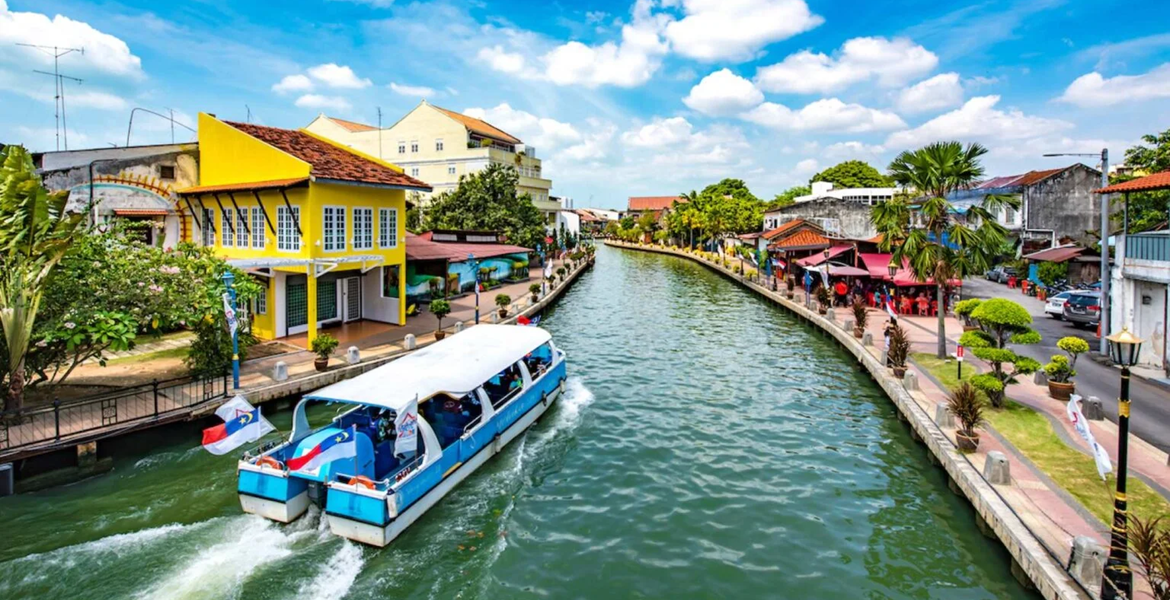
Melaka River Cruise: A 45-minute cruise along the "Venice of the East" is highly recommended, especially in the evening. The riverbanks are lined with charming old shophouses covered in vibrant street art and murals. The cruise passes by historic bridges and Kampung Morten, a traditional Malay village acting as a living museum.
Maritime Museum (Muzium Samudera): Housed within a massive, accurate replica of the Flor de la Mar, a Portuguese ship that sank off the coast of Melaka. It details Melaka’s history as a major trading hub.
Menara Taming Sari (Taming Sari Tower): A 110-meter-high revolving gyro tower that offers a fantastic 360-degree panoramic view of the entire city and the Strait of Melaka.